Cooked to Perfection: The Making of KuloNiku: Bowl Up!

You inherited a once-famous restaurant from your dear old grandmama. Now it is up to you to bring the name back to glory in the cosy town of KuloNiku.
I first came across KuloNiku: Bowl Up! while browsing Steam. A cooking sim with a video trailer good enough to hook me in and make me wishlist it. A couple of weeks later, it found me again, this time through a colleague of mine. The gameplay made her crave meatballs after watching it.
After trying the game myself, it clicked almost immediately why it earned such an overwhelmingly positive response on Steam. It was well-deserved.
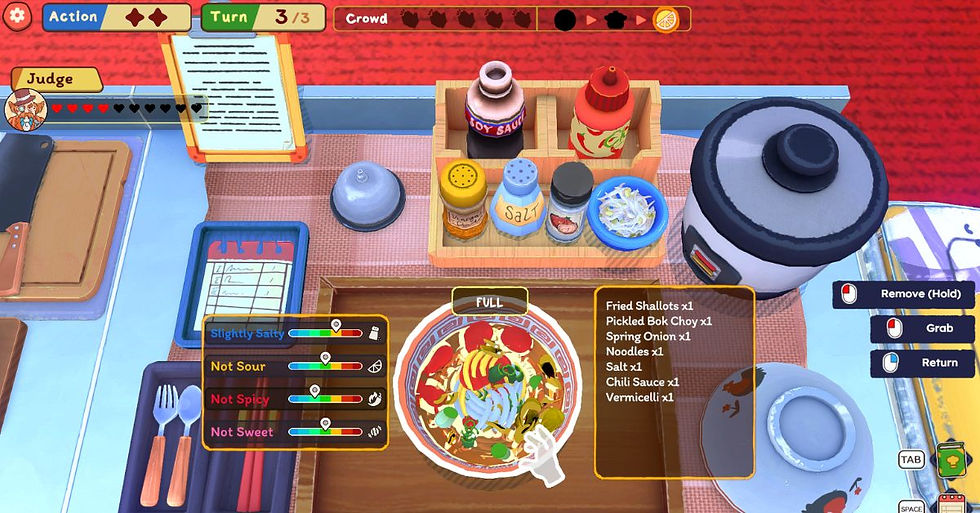
The cooking mechanics are where the immersiveness shines. It almost feels as if I am actually cooking. My personal favourite: the chilli-chopping moments. The way it is animated, paired with a satisfying knife sound on every slice, makes even the smallest prep task feel tactile. I also got to use my creativity through quirky customer requests and Meatball Brawls. Beyond the kitchen, there is a cast of characters to bond with that either become friends or rivals. The storyline gave me enough reason to keep playing.
This game gave me vibes similar to the Persona franchise — the character bonding, the daily rhythm, the sense of relationships shaping the story. Whether the team was inspired by it or it was a mere coincidence, I can’t say. For a small indie team, this was wonderful work.
Behind KuloNiku: Bowl Up! is Gambir Studio, an Indonesian indie team founded in 2016 by five friends who had already worked together for over a decade before starting their own studio.
By the time the game came along, Gambir Studio had already launched more than a dozen games across PC and mobile. Some cooking game titles on mobile include Warung Angkringan Nusantara (4.9 stars), Bubur Ayam Express (4.8 stars), and Selera Nusantara: Chef Story (4.7 stars). KuloNiku: Bowl Up! is their first cooking game made for PC.
Fun Fact: the name 'KuloNiku' is a clever bit of wordplay. “Kulo” in Javanese means “me”, and “niku” in Japanese means “meat”. But "KuloNiku" in Javanese can also mean “I am” or “It’s me”.
Small Dreams to a Bigger Kitchen
Every successful project starts small. This one began with an idea and a prototype.
Gian wanted a more realistic cooking game than its predecessors, so he started small, building a prototype that would eventually become a full-fledged game. The demo alone brought glowing reactions from gamers, fellow developers, and publishers alike.
TESSR: Can you tell us the story behind how the game came to be?
Gian: I wanted to explore creating a new type of cooking game that’s more immersive, where the player can enjoy the detailed gameplay of actually preparing and cooking the ingredients but also the structure and challenge of fulfilling customer orders. So I created the prototype. Initially, it was made for mobile, but I feel that making it a PC game can make the game more immersive because it allows for more complex simulation in the cooking process, like cutting, and provides a wider view of the kitchen.
TESSR: What was the moment that convinced you and your team to create KuloNiku: Bowl Up!, and what made you decide to go all in?
Gian: Originally, the game was smaller in scope. But when we launched the demo, it got a lot of positive reactions from gamers, other developers, and even publishers. So we kept developing the game while we pitched it to different publishers, until we finally reached a deal with Raw Fury. After we signed with Raw Fury, we worked together to polish the game even further.
Raw Fury is a Swedish indie publisher known for backing titles like Kingdom, Cassette Beasts, Norco, and Sable. Games that lasted in the indie space.
For Gambir Studio, signing with a publisher like that validated their belief in their own demo and instincts. It also set a bigger vision in motion — the real work had only just begun.
The Recipe for Immersion
Every good recipe needs the right balance of ingredients.
For KuloNiku: Bowl Up!, that balance had more to do with feel than flavour. Most cooking games simplify the cooking experience — click a button and the character does all the cooking. Gian wanted players to feel like they were actually the ones in the kitchen.

TESSR: What kind of moment-to-wish-list-moment experience do you want players to have when they play your game?
Gian: We want the players to enjoy the cooking process. When they receive a customer order, they first need to break down what ingredients or flavours are needed to fulfil the order, which is like a mini puzzle. Then, they cook the ingredients, which should feel tactical and satisfying because they actually interact with the ingredients and not just click buttons abstractly. And finally, we also have longer-term goals like upgrades and decorations to buy, as well as a story, so the player has additional motivation to keep playing.
TESSR: From a game design perspective, what’s the most important thing you’re trying to get right in this game – and why?
Gian: The immersive feeling during the cooking process because KuloNiku is a cooking game first and foremost. The actual cooking should feel satisfying. It’s also a way for our game to stand out. Most cooking games' cooking mechanics are usually pretty simple. Or if it’s a simulator, it’s very complex. We want to hit a middle ground — pretty detailed, but still easy to learn and fun to do.
That middle ground became the compass for every design decision that followed.
Simmering Ideas Down to What Matters
Not every idea makes it to the final bowl. Behind every polished mechanic in KuloNiku: Bowl Up! is a longer list of ideas that got refined, cut, or are still simmering, waiting to be perfected.

TESSR: What gameplay systems, mechanics, or ideas did you decide to leave out or simplify?
Gian: There were many ideas that we experimented with during development, but usually they were developed and improved until they became their current version. But we had some ideas that got cut from the cooking duels we call Meatball Brawl. In the early drafts of Meatball Brawl, we experimented with various ideas to add another layer of strategic challenge. For example, the player and the opponent share a bowl, and they add ingredients in turn. Or another idea was that the player could choose to swap their bowl with the opponent’s bowl.
But since Meatball Brawl already had many different elements for the player, I didn’t want to make it too complicated, so those complex ideas had to be cut.
For Gian, cutting those ideas was not a difficult call to make. Meatball Brawl already had enough moving parts to keep players engaged, and he knew there were plenty of other directions to explore without piling on more complexity.
Sometimes less is more. The best decision is not finding a way to keep an idea but to know when to let it go.
What about the ones that made it into the game? Even those are far from perfect. The recipe crafting system made the cut, but the team is still not fully settled on how it works. Gian originally envisioned it to be even more immersive than it is now. “Due to budget and time constraints, I made it simpler, like the one we currently have in game,” said Gian.
There is another trade-off that Gian was pretty candid about.
TESSR: Aside from gameplay features, what's been the biggest trade-off your team has had to make while developing the game?
Gian: The story. We need to keep the main story proportional to new gameplay features. Even now, I think the story is slightly too long. But for the players who enjoy the story and characters, they can get more by progressing the relationship stories of different characters.
Keeping the Meatballs Rolling
From prototyping to a publisher-backed release, KuloNiku: Bowl Up! has gone through quite a journey. Even with the trade-offs and cut ideas, their design philosophy stands firm, and the team never lost sight of their vision.
At the end, Gian keeps his hopes simple. He wants players to walk away feeling how fun the game was and keeping its colourful cast of characters in memory.
The game launched on Steam on 7th April 2026, and according to Gian, there are still more updates underway.
Get your hands on a copy of KuloNiku: Bowl Up! and start your own cooking journey today.
Author Bio
Alison Chai is a marketer at TESSR, an artist, and a gaming creator with a finance background. She enjoys exploring the intersections of creative work, structure, and mental well-being. Drawn to the idea of "organised chaos”, she believes that the right systems can elevate creative expression rather than limit it. Connect with her on LinkedIn.


Comments