7 Best Indie Animations Every Aspiring Animator Should Watch

TL;DR
From web shorts to streaming hits, indie animation is proving that creative freedom is what makes a story unforgettable.
It’s a different kind of filmmaking: Indie animation is made outside the traditional studio system — by solo creators or small teams with full creative control over style, story, and tone.
The work speaks for itself: From claymation to 3D computer animation, the seven shows on this list each demonstrate a distinct visual language and storytelling approach that mainstream animation rarely attempts.
The audience is already there: 61% of animation fans aged 14 to 24 enjoy indie series as much as major studio productions — and 2024 was a turning point for indie series breaking through on YouTube.
Indie animation or independent animation started after the introduction of YouTube and Newgrounds. Not only are they giving artists, animators, and creatives space to express their ideas through creative projects, but they can also explore more animation styles without the involvement of a big animation studio.
Table of Contents
What is Indie Animation? 7 Indie Animations That Deserve a Spotlight Frequently Asked Questions (FAQs) Conclusion
What is Indie Animation?
Imagine a story that feels too strange, too personal, or too daring for a major studio to approve; that's where indie animation comes in.
Independent animation, often referred to as indie animation, includes films, series, or shorts created by individual artists or small teams outside the traditional studio system. Without corporate creative restrictions, indie animators have full freedom over their work, from visual style and themes to pacing and storytelling choices. The result is animation that studios wouldn't greenlight: bolder, stranger, and more personal than what mainstream production allows.
From a production standpoint, indie projects are usually made with limited budgets and small crews, sometimes even by a single creator working solo for months or years. But those limitations often fuel creativity rather than restrict it. With no large studio expectations to satisfy, indie animators are free to develop a distinct artistic voice, experiment with mixed media, break conventional storytelling rules, and explore ideas that mainstream animation often avoids.
And right now, indie animation is having a genuine cultural moment. According to Cartoon Brew’s 2024 YouTube Animation Report, 61% of animation fans aged 14 to 24 enjoy or prefer indie animated series as much as those produced by major studios. That same year, Mashable described 2024 as a real turning point for narrative indie series breaking through on YouTube.
Check out our Guide to 5 Early Animations: A Trip Back in Time
7 Indie Animations That Deserve a Spotlight
1. Final Space
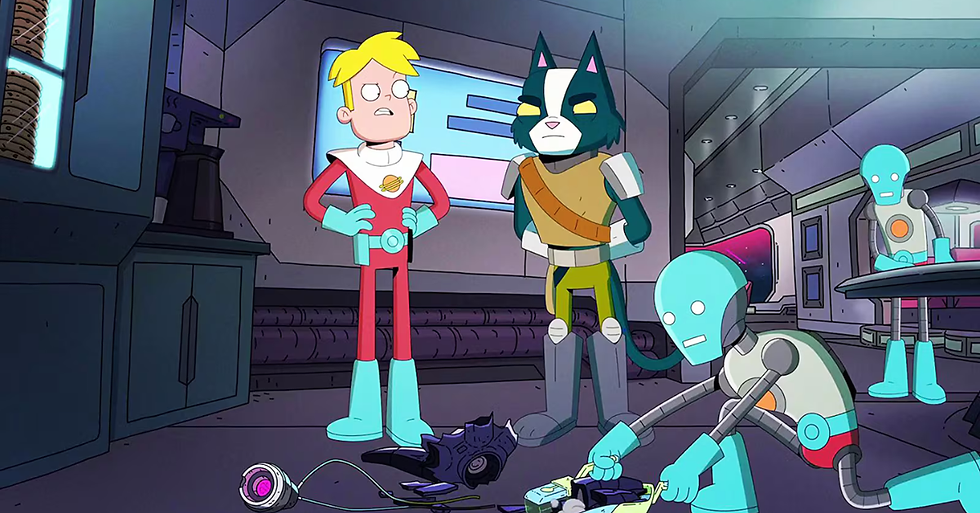
Release date: April 5, 2016
Genre: Action, Adventure, Comedy, Science Fantasy, Space Opera
Type of Animation: 2D Animation, 3D Animation
Country of Origin: USA
Indie Creator: Olan Rogers
Official Trailer: Final Space [OFFICIAL TRAILER] | Series Premiere February 26! | TBS
Piloting as an indie animation YouTube short, Final Space is a comedic adult animated series set in space. Gary, the main character, is an astronaut working towards the end of a prison sentence. There, he met the superweapon Mooncake, an alien with the capability of destroying planets. Together, they go on hectic misadventures to uncover the secret of the fictitious realm of “Final Space”.
This indie animation show aired on TBS and Adult Swim and can be credited to the work of Olan Rogers, an independent filmmaker, writer and actor. Its animation was outsourced to the Canadian studio Jam Filled, creating the 2D and 3D animations we see on our screens. However, real imagery from NASA’s telescopic pictures was used as inspiration for the backgrounds to capture space as closely as possible.
How This Show Inspires Animators
Final Space is a masterclass in blending tones. The show moves between slapstick comedy and sincere emotional storytelling—a balance that is difficult to execute and worth studying. The hybrid 2D/3D approach is a strong example of how indie creators can achieve a cinematic feel without a studio budget. Pay attention to how Rogers uses character design to signal each personality.
2. Don’t Hug Me I’m Scared

Release date: July 29, 2011
Genres: Comedy, Horror, Mystery, Thriller, Drama
Type of Animation: Claymation, Stop-motion, Traditional Animation, Flash Animation, Computer Animation
Country of Origin: UK
Indie Animators: Becky Sloan, Joseph Pelling
Official Trailer: FLY
Don’t Hug Me I’m Scared (DHMIS) is a web series turned TV show that contrasts nostalgic, childlike visuals with off-putting themes. It’s a horror musical that utilises mixed media in its storytelling—from puppets to an amalgam of all sorts of animation methods.
The show follows three main characters: the Red Guy, the Yellow Guy, and Green Duck. Episodes usually start off with an innocuous tune and setting, with lively and colourful objects and supporting casts.
The indie animation show combines live action with animation, utilising methods like claymation, stop-motion, traditional animation, flash and computer animation. This, and other aspects of DHMIS, are largely attributed to the works of two friends, who met while studying Fine Art and Animation in university. After the pilot aired, it was largely funded through Kickstarter campaigns, and with the show’s popularity, the two indie animators reached their goals in no time.
How This Show Inspires Animators
DHMIS is one of the examples of mixed-media animation in indie history. The creators combine claymation, stop-motion, traditional animation, flash, and live action—not as a gimmick but as a way to make the world feel unstable and unsettling. Aspiring animators should study how DHMIS uses familiar visual language (bright puppet aesthetics and children’s TV formatting) to create maximum discomfort through contrast.
Want to go deeper into stop-motion specifically? Read our guide to 5 Media in Stop Motion Animation.
3. The Painting

Release date: November 23, 2011
Genre: Drama, Action, Adventure
Type of Animation: 3D computer-animated, designed to appear as hand-drawn 2D art
Country of Origin: France
Indie Animator: Jean-François Laguionie
Official trailer: The Painting - Now on DVD [Official US Trailer]
Set inside an unfinished painting, this French indie animation follows three friends from different groups, who set out to find their creator. The movie is highly allegorical to themes of class divide and racism—the unfinished painting depicts three largely different classes: Allduns, figures that are fully painted; Halfies, the halfway painted people; and Sketchies, who are mere sketches. The fully painted figures pillage the Halfies, while the Sketchies are enslaved.
This indie animation emulates the look and feel of an oil painting in a digitised 3D method, paying homage to the movements and painters that shaped Western art history. Each character was individually designed by Jean-François Laguionie, the director of The Painting, to ensure that every element of the animation was given equal love and attention.
How This Show Inspires Animators
The Painting’s most defining achievement is in its visual concept: making an animation look like a living oil painting, rendered through 3D techniques. Each scene pays homage to the artistic traditions it inherits—impressionism, abstraction, and portraiture—while remaining fully animated and kinetic. For aspiring animators, this is a lesson in using art history as a reference language.
4. Mary and Max

Release date: April 9, 2009
Genre: Drama, Comedy
Type of Animation: Claymation
Country of Origin: Australia
Indie Animator: Adam Elliot
Official Trailer: Mary and Max Trailer
Mary and Max tells the tale of an unlikely friendship between the eight-year-old Mary and a forty-four-year-old man with Asperger's, who becomes pen pals. Set in 1970, this near-monochromatic Claymation comedy-drama deals with themes of neglect, isolation and mental health. Mary and Max’s friendship spans over the course of 20 years, and as we watch Mary grow into adulthood, Max’s struggles with anxiety and disorder only worsen.
Including a fully functional miniature typewriter, Mary and Max was made with extensive props, sets and puppets—and was inspired by the Australian indie animator’s personal experience with a long-time pen pal of his. Taking inspiration from his friends and family is the animator’s trademark, coining a term called “Clayography”, a combination of claymation and biography.
How This Show Inspires Animators
Mary and Max is essential viewing for any animator interested in using craft as emotional language. The near-total removal of colour is not a limitation; it is a deliberate choice that makes the rare warm tones feel meaningful. The film demonstrates that technical “flaws” can become a signature aesthetic and that stop-motion can carry mature, nuanced storytelling in a way that is quietly devastating.
5. Salad Fingers
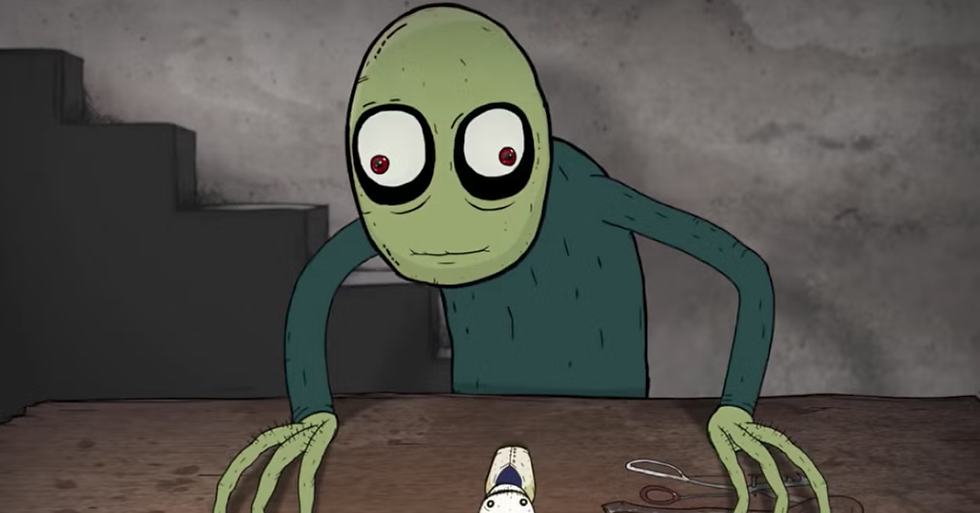
Release date: July 1, 2004
Genre: Comedy, Psychological Horror
Type of Animation: Flash Animation
Country of Origin: UK
Indie Animator: David Firth
Official Trailer: David Firth - YouTube
Yet another staple in internet history, this indie animation by the British David Firth is a morbidly humorous web show that follows the titular character, Salad Fingers. Absolutely enamoured by rust, Salad Fingers is a mentally disturbed, green and lanky person who’s set to roam an empty world.
Each episode is equally surreal and absurd and follows Salad Fingers' day-to-day life in a seemingly post-nuclear war Earth. It’s a show where backstory, truths and lore are highly dependent on fan theories—as all the information we receive is from the unreliable, fractured mind of Salad Fingers.
Animated and written by David Firth, Salad Fingers is one of the few indie animations uploaded to his YouTube channel. The web show was animated through Flash, truly a quintessential of the internet in the 2000s. Salad Fingers, too, was voiced by Firth himself, where unique inflections and soft tones of the character were the result of mimicry of the elderly—and not wanting to wake his parents up.
How This Show Inspires Animators
Salad Fingers is proof that resource constraints can produce something extraordinary. While the first episode took Firth “one day and one night” to produce, later episodes took up to six months to a year, reflecting how deeply he developed the world over time. The series demonstrates how audio design, pacing, and negative space can carry psychological weight in ways that lavish visuals often can't. Every animator studying horror, tension, or surrealist storytelling should spend time with this series.
Interested in the tools behind animations like these? Check out 7 Digital Animation Tools Every Animator Should Know.
6. Homestar Runner

Release date: January 2000 (the original children’s book was created in July 1996)
Genre: Animation, Comedy, Sport
Type of Animation: Computer Animation
Country of Origin: US
Indie Animator: Matt Chapman, Mike Chapman, Craig Zobel
Official YouTube Page: homestarrunnerdotcom - YouTube
This indie animated comedy web series and website was created by Mike and Matt Chapman, collectively known as The Brothers Chaps. Originally created as a children's book by Mike Chapman and Craig Zobel during their time at the University of Georgia, the series follows the quirky lives of the residents of Free Country, USA, centred around a dim-witted athlete and a self-absorbed wrestler.
Technically, Homestar Runner grasped comedic timing through minimal movement – a Flash animation lesson in how stillness and sound design can do more than action. The Brothers Chaps built and maintained the show entirely independently, refusing TV deals to preserve full creative control. At its peak, it was one of the most-visited sites on the web for Flash Animation, sustained purely through merchandise sales and never featuring advertisements.
How This Show Inspires Animators
Homestar Runner is a case study in world-building and community without a traditional studio. Before social media existed, The Brothers Chaps built an entire universe—complete with characters, in-jokes, spin-offs, and lore—purely through web distribution. For aspiring animators, the lesson is clear: a regular cadence of short-form work builds a loyal audience over time.
7. The Amazing Digital Circus
Release date: October 13, 2023 (Series began in January 2024)
Genre: Adult animation, Dark comedy, Psychological drama
Type of Animation: Computer Animation
Country of Origin: Australia
Indie Animator: Gooseworx
Official Trailer: THE AMAZING DIGITAL CIRCUS [OFFICIAL TRAILER]
The Amazing Digital Circus is an Australian animated web series crafted by Gooseworx and produced by Glitch Productions. It centres on a group of humans—Pomni, Jax, Ragatha, Gangle, Kinger, and Zooble—who are trapped in a circus-themed virtual reality game. It is one of the fastest-rising animated series in YouTube history.
Guided by a whimsical AI ringmaster named Caine, they embark on surreal adventures to deal with their circumstances, all while battling to preserve their sanity and prevent themselves from morphing into digital horrors.
How This Story Inspires Animators
The Amazing Digital Circus is the clearest current proof of what indie animation can achieve. It's a high-quality, fully 3D computer-animated series produced entirely outside the studio system. The visual identity, character design, and world-building rival anything on mainstream streaming. For aspiring animators, the show demonstrates how a strong conceptual hook can sustain both horror and comedy simultaneously.
TESSR's My Work feature gives every animator a clear view of all their assignments, whether scenes or designs, so you always know what needs to be tackled next and can build strong project management habits from the ground up. Explore TESSR here.
The Rise of Indie Animation: What’s Happening Right Now
Indie animation is actively transforming the industry. Projects like The Amazing Digital Circus have shown that independent creators can truly push the limits of storytelling and visual design without relying on major studios.
Recent trends also show that indie animations on YouTube attract strong international audiences, often gaining viewers beyond their core fanbase and continuing to grow in views long after each episode is released. This creates a very different distribution model compared to traditional studio releases, and it’s one that independent animators can tap into from the very beginning.
Looking for more inspiration? Don't miss our list of 8 Sci-Fi Animation Masterpieces to Watch.
Frequently Asked Questions (FAQs)
What is the best software for creating 3D indie animation projects?
Blender is widely considered the best free option for 3D animation since it’s open-source, powerful, and commonly used by indie creators to produce professional-level work without cost. If you have access to paid industry tools, Maya and Cinema 4D are top standards. For beginners looking for an easier start with character animation, Cascadeur is a user-friendly choice focused on 3D movement.
What is the best software for creating 2D indie animation?
Toon Boom Harmony is the professional standard for 2D animation and is used by major studios and indie creators alike. Adobe Animate (formerly Flash) is a strong alternative with a long indie animation heritage. Clip Studio Paint and Rough Animator are popular options for animators starting out, particularly on a tablet.
What are the top platforms to showcase indie animated films?
YouTube: The most popular platform for indie animation due to its global reach and free access, helping creators build large audiences before potentially moving to streaming platforms.
Newgrounds: A key hub for indie animation culture and community feedback.
Vimeo: The go-to for more polished, film-festival-style short films.
Instagram Reels and Webtoon: A growing space for short-form animations and animatics.
Patreon: A useful tool to fund longer or ongoing indie projects once an audience is established.
Conclusion
Indie animations can be unsung heroes in the industry. Many make it into the mainstream for reasons that are deserved. As creation and sharing become easier, expect many more indie animations to grow out of obscurity.
Whether you’re watching for entertainment or studying for inspiration, the top indie animated films and series on this list each offer something you won't find in mainstream animation. The craft is different. The freedom is real, and if you’re an aspiring animator, the same freedom is already yours.
If you're an animator looking for project management software for creative works, check out TESSR and explore the Scene Hub feature, where you can track, review, manage, and update scene or visual progress in a single pop-up window.
Author's Bio With a background in travel and lifestyle storytelling, Farah enjoys turning everyday overwhelm into something a little softer, a little funnier, and a lot more human. She believes in building habits that actually stick (most days), romanticising productivity just enough to survive it, and finding meaning in the mess in between. Currently based in Malaysia, Farah continues to explore writing as both a craft and a coping mechanism, working as a creative writer at TESSR. To know more about her, check out her LinkedIn.

Comments